
How AI-Powered Social Media Analytics Turn Your Data Into Better Business Decisions

Social media has become more than a place to publish content. Every post, comment, share, mention, and customer conversation creates information about your audience. It can tell you what people care about, what content resonates, what customers are saying about your brand, and how your competitors are performing.
For businesses, this makes social media a continuous source of customer and market insight. Having access to all that information is only the beginning.
More data doesn't always mean more clarity
You post on Instagram. Your audience responds. Your team manages conversations. A campaign runs across several channels. Meanwhile, competitors are publishing their own content.
Suddenly, there are numbers everywhere. Instagram has its own analytics. Facebook has another dashboard. TikTok has its own metrics, while customer conversations sit inside comments and DMs.
- You may know how many people engaged with a post.
- You may know how many messages your team received.
- You may even know how your competitors are performing.
But can you easily see what all of that information means? More importantly, can you use it to decide what to do next? That's where social media analytics needs to go beyond reporting numbers.
Turn social data into something you can act on
AI-powered analytics can help businesses move from simply seeing what happened to understanding why it happened and what to do next.
Axis Social brings social media management and analytics together, allowing businesses to plan campaigns, create and publish content, manage conversations, and measure performance from one platform.
Instead of treating analytics as a separate reporting exercise, businesses can use performance data as part of their everyday social media workflow.
How AI-powered analytics works
Effective social media analysis starts by looking at more than one set of numbers.
Posting analytics can show which content is resonating with your audience and how performance changes across platforms.
Competitor analytics can help businesses understand what other brands are publishing and identify potential opportunities.
Inbox analytics can reveal what's happening in customer conversations, including engagement and response activity.
When these different sources of information are brought together, businesses get a more complete picture of their social presence.
AI can then help interpret that information by identifying patterns, highlighting important changes, and turning complex data into insights that are easier for teams to understand and act on.
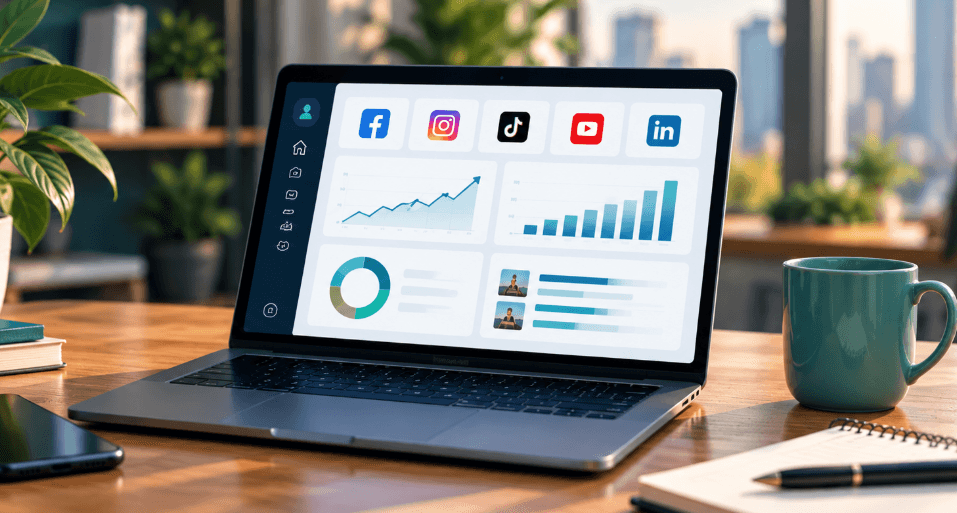
Make better decisions with the data you already have
The value of analytics isn't knowing that a post received 10,000 views. It's understanding what that performance tells you.
- Which topics should you create more content around?
- Which formats are resonating with your audience?
- When are customers most engaged?
- Are people responding positively to a campaign?
These insights can help teams make better decisions about content, campaigns, resources, and customer engagement. Instead of guessing what might work next, businesses can use evidence from what has already happened.
See the bigger picture
The deeper value of social media analytics is that it connects individual interactions to broader business decisions.
A high-performing post can reveal a topic your audience cares about. A change in sentiment can highlight a potential customer experience issue and competitor activity can reveal an opportunity in the market.
When these signals are viewed together, social media becomes more than a marketing channel. It becomes a source of business intelligence.
And AI makes it easier to find those signals without requiring teams to manually work through thousands of data points.
From data to decisions
Axis Social brings posting performance, customer conversations, competitor activity, and AI-powered insights together in one place. The goal isn't to give businesses more dashboards to check.
It's to help them understand what's happening across their social channels and make better decisions about what to do next.
Because social media analytics shouldn't stop at:
“Here's what happened.”
It should help answer:
“Here's what it means. And here's what we should do next.”
See the numbers.
Understand the conversations.
Make the next move count.